
Our Location
304 North Cardinal St.
Dorchester Center, MA 02124

Know the common signs of worn or damaged rotavator blades and why regular inspection matters for field performance.
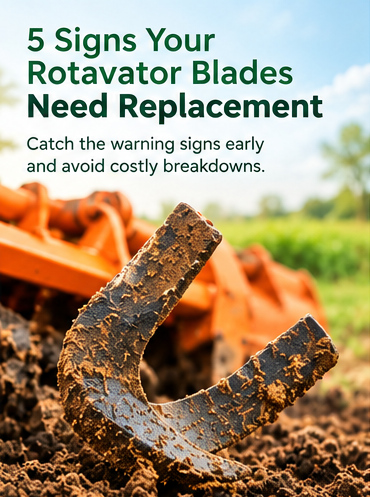
Rotavator blades experience repeated contact with soil, stones and crop residue. Over time, normal wear can change their shape and reduce their effectiveness. A simple inspection before and after field work can help identify problems early.
A blade that has become significantly shorter, thinner or differently shaped may not work like a serviceable blade. Compare the condition with the manufacturer’s replacement guidance.
Cracks, bends or other structural damage are reasons to stop and inspect the implement. Do not continue operating with a damaged blade.
If blades show noticeably different levels of wear, check the complete set and investigate possible fitting or operating issues. Replace parts as recommended rather than mixing unsuitable blades.
Uneven soil preparation or a change in the finish may have several causes, including blade wear, incorrect setup or unsuitable operating conditions. Inspect the machine before assuming blades are the only cause.
Worn bolts, nuts or mounting points can affect secure fitting. Check all fasteners and use the correct replacement hardware and tightening procedure.
Inspect the full rotor assembly, not just one blade. Follow the rotavator manufacturer’s maintenance instructions and replace damaged components before returning the machine to work. ASTAR AGRI INDUSTRIES supplies rotavator blades and related agricultural machinery parts.
ASTAR AGRI INDUSTRIES PVT. LTD.
Contact: 75094-49000 · Visit astaragrii.com/
